



![[Translate to Englisch:]](https://www.innotech-safety.com/fileadmin/_processed_/1/a/csm_Mehrere_PV-Kunden_gleichzeitig_betreuen__kann_oft_zur_Riesenherausforderung_werden-header_c1a520d846.jpg "[Translate to Englisch:]")
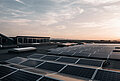

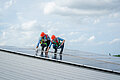

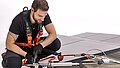



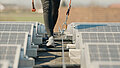



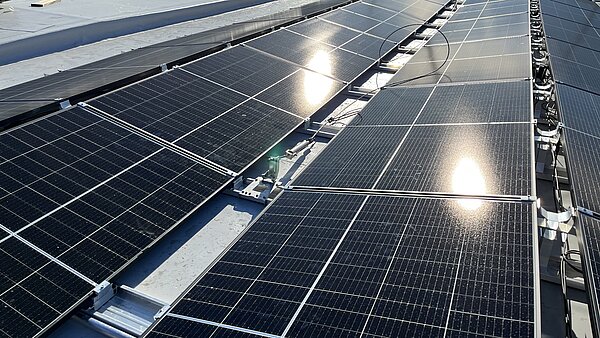

And not only does a PV system have to be installed, it also needs regular cleaning and servicing. Because the roof is amongst the particular danger areas having increased fall risk, a professional, certified fall protection system is essential for these tasks, and is even legally prescribed. Basically, the operators of the PV system are responsible for the safety of their employees on the roof. However, in the course of their consultancy, solar system installers are also obliged to inform their customers about the topic of safety and about the responsibility which the customers take on when installing a PV system on their roof. However, this information alone does not help the future PV system operator any further.
Quite the contrary. In this way, from their customers’ perspective, solar system installers may open a completely new chapter containing many additional questions which often remain mostly unanswered, unfortunately. As a solar system installer, you can eliminate this unfortunate state of affairs! You do this by simultaneously offering the appropriate fall protection for the respective PV system – this is how you practically become a one stop shop for your customers. And they will appreciate this, because they then no longer need to perform further research into potential liability for work on the roof.
Instead, after the meeting with their solar system installer, they know that they have received very good advice and that they have absolute legal certainty in terms of fall protection. In addition, this allows them to be sure that their PV installation on the roof is always able to provide optimum performance, because important servicing and cleaning tasks can be performed in safety at any time.
As full service providers, solar system installers enjoy many benefits
Installers and solar technicians who, in addition to the individual PV system, also address the subject of safety in their customer meetings are at a distinct advantage. This makes you, as an installer or solar technician, even more of an expert. But for this a reliable, professional partner and/or manufacturer of certified fall protection systems is required who can offer the optimum solution for the respective use case. Only in this way can you offer your customers an absolutely efficient solar system which is as safe as possible. This also provides you with a significant advantage in expertise over your competitors.
The numerous benefits in terms of safety of collaborating with a partner also include that solar system engineers can obtain increased turnover – for every order, as well as from potential follow-on business and long-term maintenance contracts. This is because the law mandates that a fall protection system for PV installations be subjected to an annual inspection. The solar system installer thus returns to the systems that he installed, and can generate further orders with next to no effort. As an added benefit, the solar system installer constantly stays in touch with his customers and remains available as their contact partner.

The benefits for solar system installers at a glance
- Legal certainty in terms of fall protection for you as a solar system installer, and for your customers
- Always the best safety solution for the respective PV system, built-in to the proposal
- Safety on a flat or pitched roof while installing the PV system, thanks to the fall protection system
- Very positive image as a responsible solar system installer
- Increased turnover per order, plus the opportunity of follow-on orders
- Comprehensive support from INNOTECH
Tip:
For roof-based PV systems, recommend a fall protection system which can be attached directly to the PV substructure, as long as this is possible under the respective circumstances. This does not create shade on the panels. Roof penetrations are also completely avoided when this installation variant is used. In this way, the fall protection system requires no additional space on the roof, where it is anyway in short supply. And: This combined structure optimally secures all danger zones and access routes on the roof and in the access and exit area, and so it can also be used for all other tasks on the roof, such as when the air-conditioning system or the satellite dish require repairs, or other activities arise.
Customer benefits are also your benefits
In addition to legal certainty in terms of fall protection, the customer has no overheads whatsoever from research and obtaining proposals for the optimum fall protection. Neither does he have to engage additional tradesmen, but instead has only a single contact partner. Furthermore, no additional travel or management costs arise to him for the possible retrospective installation of the fall protection system. And the PV system performs optimally in the long term.
And one thing goes without saying: The more the client perceives the collaboration with the solar system installer to be effortless, and the better and safer he feels from the get-go, the greater is the likelihood that he will recommend your services. Word of mouth ranks among the most effective ways to advertise – and to boot, it does not cost you a cent.
Cooperation with a safety partner in practice
During the practical implementation of the cooperation, a detailed analysis of the onsite circumstances is created in the course of a site visit by the fall protection system provider, together with the installers or solar technicians. As a result, the respective fall protection system is defined for the planned or already existing PV system. A service contract is then concluded, so that safety when working on the PV system is also ensured in the long term. As a solar system installer or installer of PV systems, you can concentrate on your specialist area, and advise and service all customers optimally in this respect. In addition, the safe installation of the PV system itself is also ensured.
The benefits of collaboration at a glance
- Planning certainty: when professionals plan, safety and energy efficiency are combined.
- Appropriate, individualised overall concept: optimum safety for your PV system in each individual case.
- Products always at the state of the art: Top quality and latest technology, for increased safety.
- Standards and legal know-how: all systems are thoroughly tested - in combination with the substructure of the PV system.
- Diversity of products and systems: the right solution for every substructure, every roof form and PV system.
- Complete product control: from Goods Inwards to manufacturing, our entire product control takes place in-house. This means that special solutions and customer-specific adaptations can be implemented quickly.
- Seamless support: For every question or problem which arises.
- Short delivery times: protecting humans and the environment.
- Professional training (see below): extensive training sessions with certification.
- Digital documentation/INNO|doc (see below): Documentation of the installation and of servicing and cleaning tasks, at the press of a button.
Furthermore, all tasks performed on the roof and/or the PV system are also documented, and therefore you, as an installer or solar technician, and your customer always maintain an overview. This documentation can be performed electronically or digitally. Professional providers of fall protection systems also offer solid training sessions in the use of the respective fall protection systems. Especially in this area, comprehensive and detailed training measures with corresponding certification of the participants are of the greatest importance, so that the safety solutions are also used correctly. This is the only way to prevent serious injuries in an emergency.
Summary
Solar system installers who, in addition to the optimally appropriate PV systems, can also provide the best possible fall protection, not only have a better image than their competitors – they can also use this to create increased turnover. This not only applies to every single order, but also to potential follow-on business which can result from it, because this is how you give the PV system operators a feeling of safety, and remain in regular contact with the clients in the long term. And they also benefit, because they are provided with everything from a one stop shop, and have no need to research tediously or to engage other tradesmen.
If you too wish to enjoy the benefits of collaborating with a professional partner for fall protection systems, then you should download this guide immediately here.