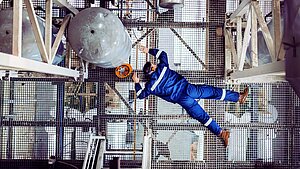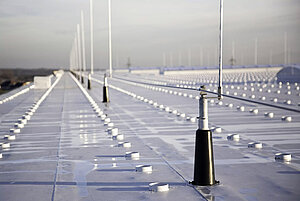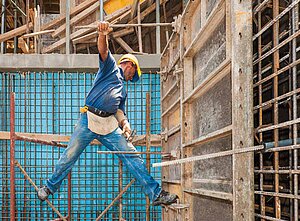
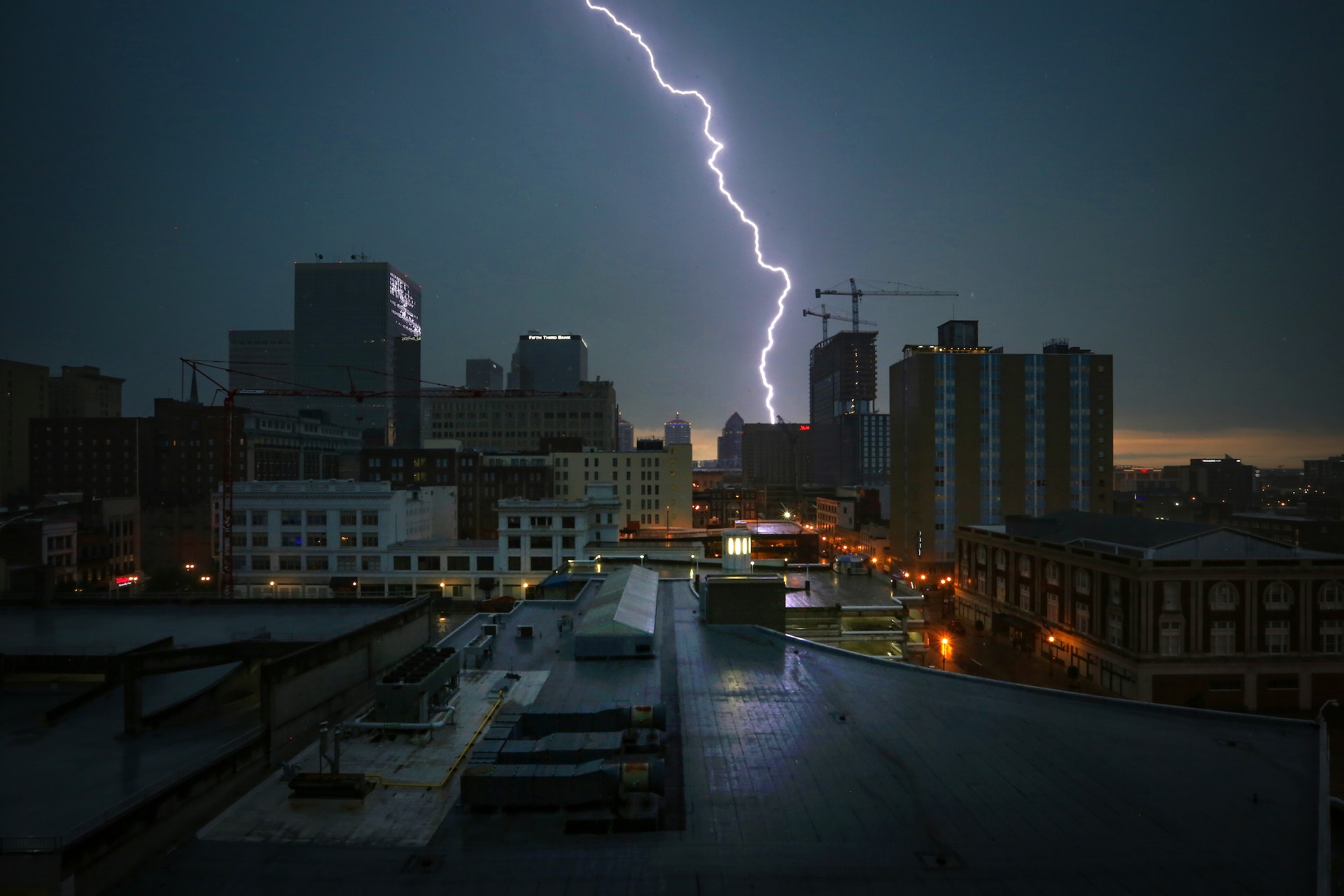
Lightning and lightning strikes have become more prevalent in our minds, not least because of the current increases in bad weather and lightning storms: Lightning strikes primarily occur on the roof / at places, corners and edges with the highest elevation. If a fall protection system for various work is installed on a building, it is usually located exactly in these exposed places, allowing lightning to strike there as well. Accordingly, lightning protection devices - generally and colloquially known as "lightning arresters" - need to be installed to protect the fall protection system.
Shared liability
The liability for damages caused by lightning strikes occurring during the use of a fall protection system is usually shared by the owner of the building AND the contractor utilising the fall protection system.
In Austria, the Ö-Norm B3417 standard mandates that the owner of the building provide a fall protection system and that the contractor make use of this system. This means that the liability is split between the building owner and the company performing the work. The safety of the employees must be ensured in any case, also indirectly, by an appropriate lighting protection system.
A higher level of exterior lightning protection
Lightning protection is divided into interior and exterior lighting protection. Interior lighting protection comprises, in short, a variety of mainly electronic measures, such as equipotential bonding. More tangible and generally known as “lightning arresters”, exterior lightning protection equipment is intended to deflect electricity “into the ground”.
Simply put, exterior lightning protection is a good option for ensuring the safe use of a fall protection system. Such a measure is necessitated by the fact that lightning can also strike a fall protection system without being noticed and – worse yet – cause damage that is not necessarily visible from the outside. Therein lies the danger and the illusion of safety!
A safety system compromised by lightning poses a danger to life and limb. And, the damage is not always visible from the outside! This has led to the creation of a simple system that allows you to check the fall protection system for impact by lightning strike.
Lightning rod with control option
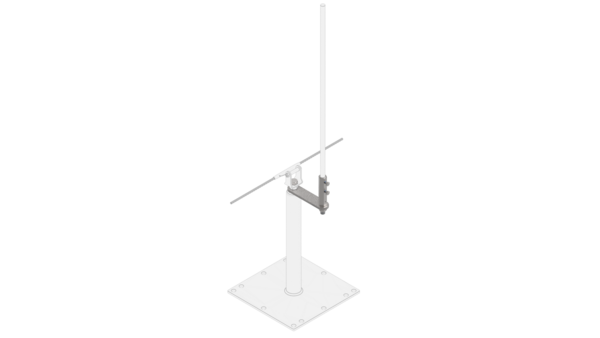
A well-known system for lightning protection is offered by so-called lightning rods. They “arrest” the lightning, keeping it from striking other buildings and deflecting it safely. Mounted on top of the fall protection system, these lightning rods are additionally equipped with lightning detectors. A readout of the date collected by these detectors can be used to find out - prior to the use of the fall protection - whether a lightning strike has occurred or not. In Austria, the data is read by Oö. Blitzschutzgesellschaft m.b.H.
The system should be checked for lightning strikes before installation and maintenance work is carried out in conjunction with a fall protection system. Only then can the work be performed safely.


EN62305-3 - the lightning protection regulations
Just as explained under the legal principles of fall protection, European standards are translated into national laws. Consequently, the adaptation of directive EN 62305-3 in the respective country will lead to specific characteristics and interpretations. Notwithstanding, the basis for its stipulations remains the same.
In Austria, the standard ÖVE/ÖNORM EN 62305-3 deals with all requirements that apply to the protection of physical structures and people from lightning. It describes the properties a “lightning protection system” needs to posses in order to protect buildings and people. To ensure reliable safety, this standard should be consulted as early as the planning stage of a lighting protection system.
The ÖVE/ÖNORM EN 62305 standard is composed of 4 parts. The third part discussed here is, just as the fourth part, constitutes a protective standard. These two parts are preceded by two generally applicable standards (parts 1 and 2), which deal, among other things, with the explanation of lightning and the risk analysis of lightning strikes.
Example: Lightning protection for a PV installation on a flat roof
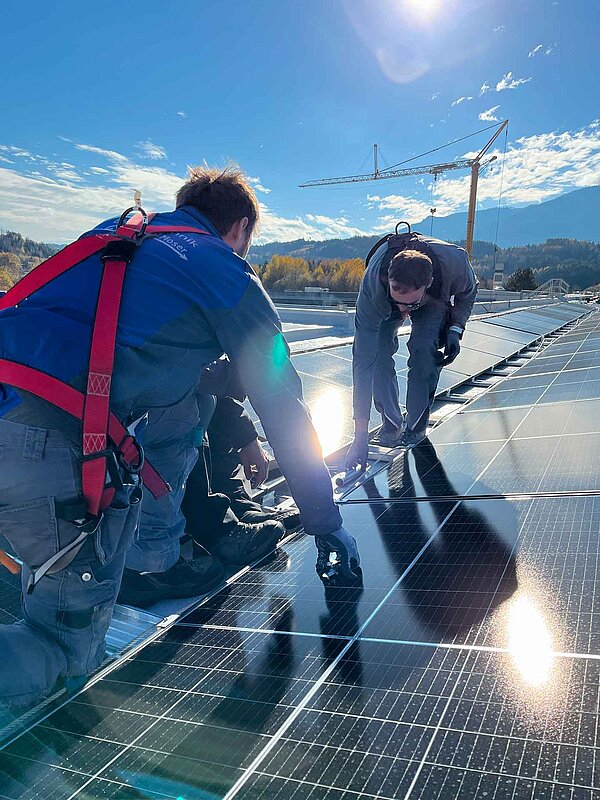
The rising interest in renewable energy production has made photovoltaic installations more commonplace on roofs across a wide variety of buildings. While predominantly mounted on steep roofs when designated for private residences, a photovoltaic installation intended, first and foremost, for public and large corporate buildings is most commonly installed on a flat roof and used for power generation. The panels of these installations require inspections and maintenance at regular intervals.
Individuals stepping on the flat roof must be safeguarded by a fall protection system installed in the fall-risk areas. To ensure its safe use, the system must - as described in this post - be equipped with a lightning protection system. The lifeline system AIO and the BIA Set meet the necessary requirements.
Lifeline Systems AIO
Our powerful AIO lifeline system provides a reliable and versatile solution.
The powerful lifeline system that offers a whole host of variants
Whether on a flat or pitched roof, in an industrial environment, in the energy industry, on poles, or in other application areas, the topic of fall protection is ever-present.